



pymantra - Reaction-centered Metabolic Network Analysis#
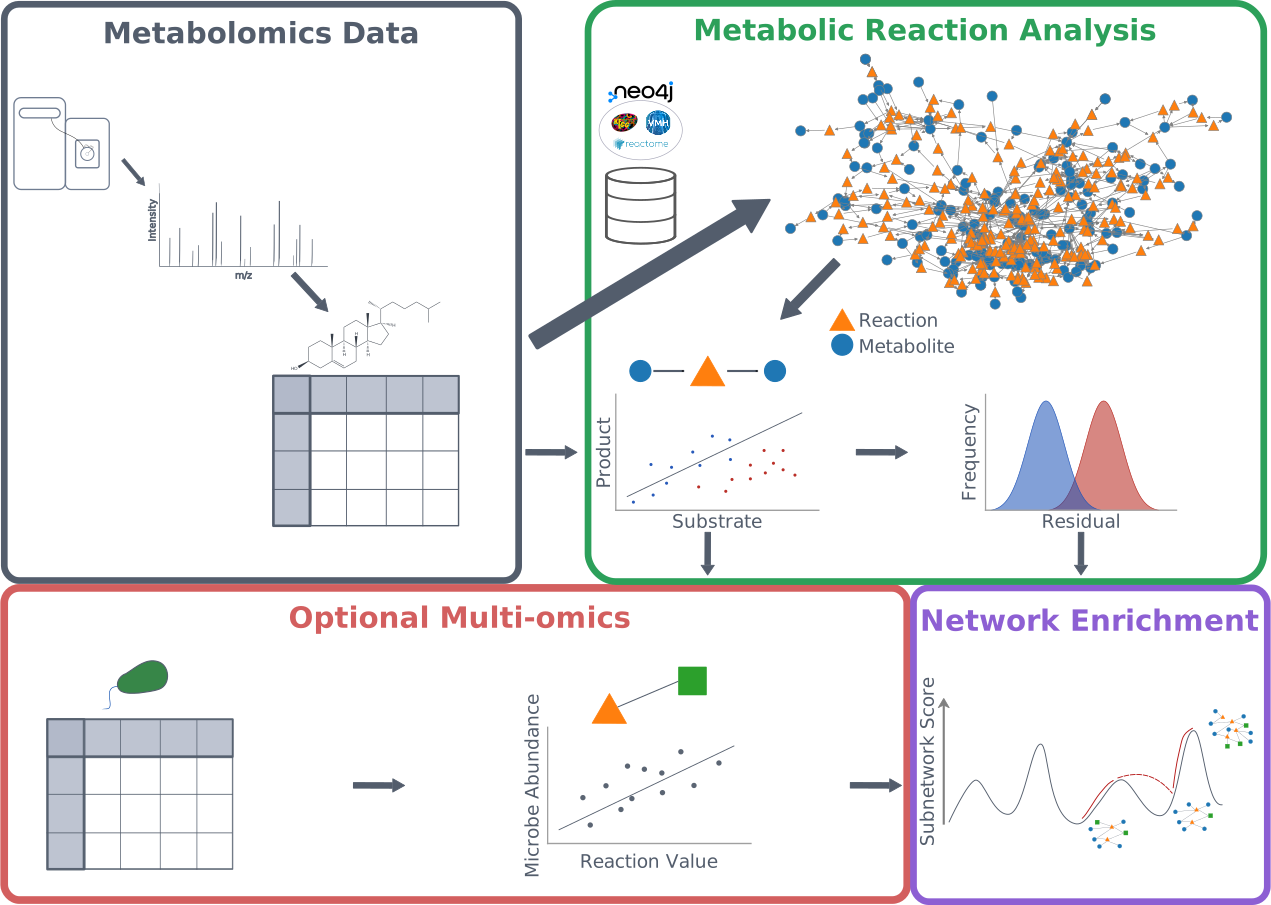
mantra is a conceptual approach to compute estimates for the change of metabolic reaction activity between two groups of samples. It relies on linear relationships between substrate and product metabolites of a reaction and how the coefficients of these relationships change between conditions. In addition to analyzing metabolomics data, mantra also provides a correlation-based approach for multi-omics integration.
As an approach to provide smaller, mechanistically interpretable results based on both the reaction estimates (and multi-omics associations) and the metabolic network structure, network enrichment on the basis of a simulated-annealing assisted local search is used.
The pymantra package provides all functionalities for computing changes in
reaction activity, multi-omics associations and performing the network
enrichment as well as reporting and plotting their results. Additionally, it
contains utilities to perform metabolite ID mapping.
The general workflow of the package is summarized below.
Manuscript#
If you would like to learn more about the details of the methodology and see some real-world results please check out our manuscript [Köhler et al., 2023]
Getting Started#
Installation#
To get instructions on installation, follow our installation guide.
Examples#
For an introduction to mantra’s functionality and how to use it, check out our examples.
API Documentation#
The full documentation is found in the API section
Contents
About